
Perfect for a short walk or a longer exploration, LaGrange College offers a rich blend of history, scenic beauty, and one of the best vantage points in the city from its location on “The Hill.”
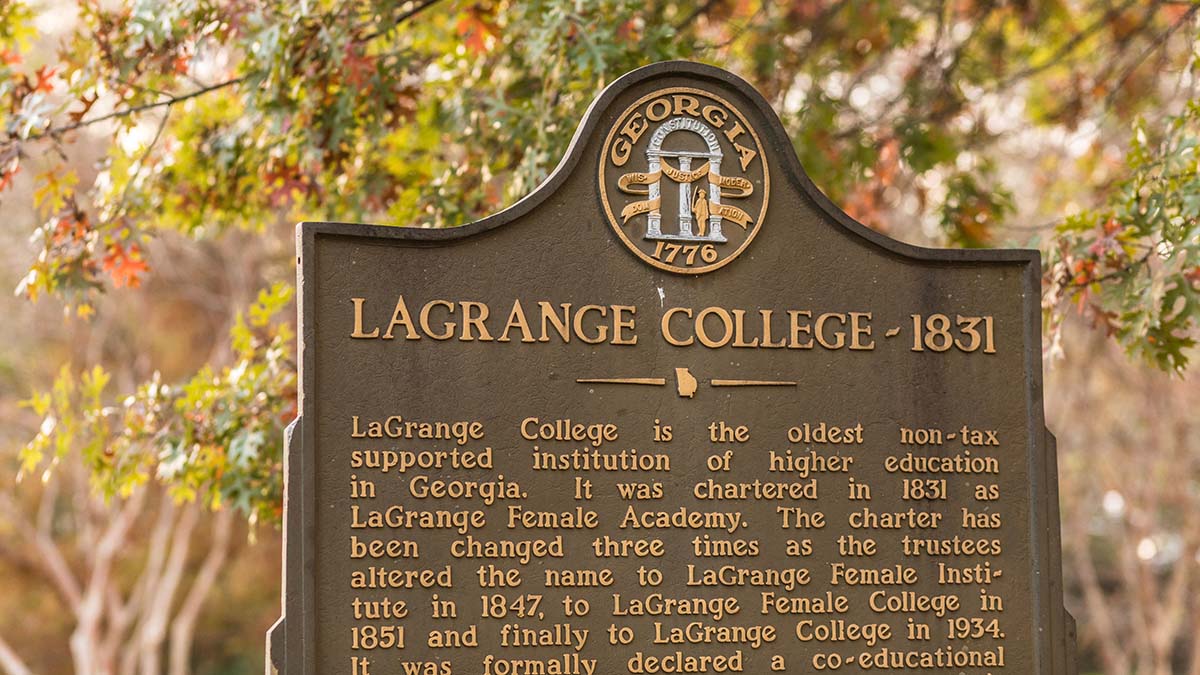
As Georgia’s oldest private college, LaGrange College is deeply rooted in history. Chartered in December 1831, the institution has endured wars, leadership changes, and the steady evolution of its student body—while remaining a constant presence in the community.
Today, the campus invites visitors to slow down and explore. Historic buildings stand alongside newer additions, reflecting both the college’s legacy and the continued growth of LaGrange itself.
Nearly 200 Years of History at the Oldest Private College in Georgia
From LaGrange Female Academy to LaGrange College
Even before its official charter, the school began as LaGrange Female Academy, an institution housed in a large home near the current campus.
In 1847, it became LaGrange Female Academy and was granted the ability to confer degrees. By 1851, the school had moved to its present location on “The Hill,” and was renamed LaGrange Female College.
The first president was Harriet Behnam, who started the school, assisted by her sister, Miss A.E. Benham. Some of the school’s other noted leaders have been Thomas Stanley, Ellen Ramsey Stanley (Thomas’ wife), Joseph T. Montgomery, Rufus Wright Smith, and Daisy Davies, who all played a significant and lasting role in shaping the college’s foundation.
In 1856, the Georgia Conference of the Methodist Episcopal Church South assumed ownership of the college. Today, it remains affiliated with the North Georgia Conference of the United Methodist Church.
The college faced several moments of uncertainty throughout its history. At one point, it merged with Southern Female College after that campus was destroyed while serving as a Confederate hospital during the Civil War. When plans were later made to close LaGrange College in the 1920s, four women on the faculty refused to accept the decision—ultimately preserving the institution and ensuring its future.
The school was renamed LaGrange College in 1934. It began admitting male students full-time in 1949, and by 1953, the Board of Trustees formally established the college as coeducational with both male and female dormitories.
One of the college’s earliest and most notable students was Eliza Frances Andrews (1840–1931), a writer and botanist who pursued a career beyond the traditional expectations of her time. In 1926, she became the only American woman admitted to the International Academy of Literature and Science.
Today, LaGrange College enrolls more than 1,000 students representing multiple states and countries. Known for strong programs in drama, music, and the arts, the college continues to cultivate creativity and academic excellence.
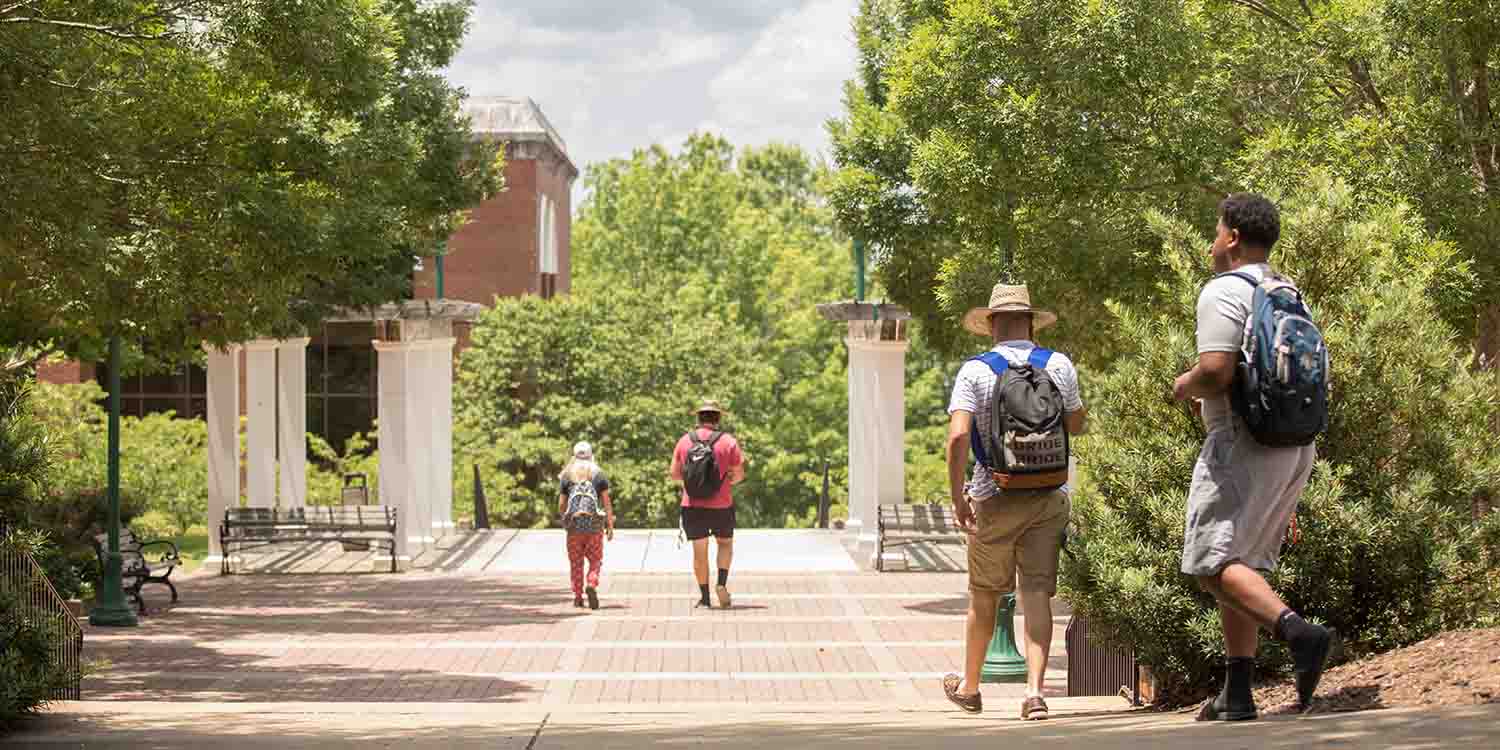
To begin your visit, park at the corner of Broad Street and Park Avenue. From there, you’ll find several of the campus’s most notable buildings—Smith Hall, Hawkes Hall, Pitts Hall, and the Chapel—within easy walking distance.
Exploring The Campus
Smith Hall
Smith Hall, also known as “College Home,” is the oldest building on campus. The main structure was built in 1860 using handmade bricks formed from local clay. Additions were made in the 1880s and 1890s, with a major renovation completed in 1989. A defining feature today is the Victorian-style porch that extends from the main portico and wraps around the north side of the building.
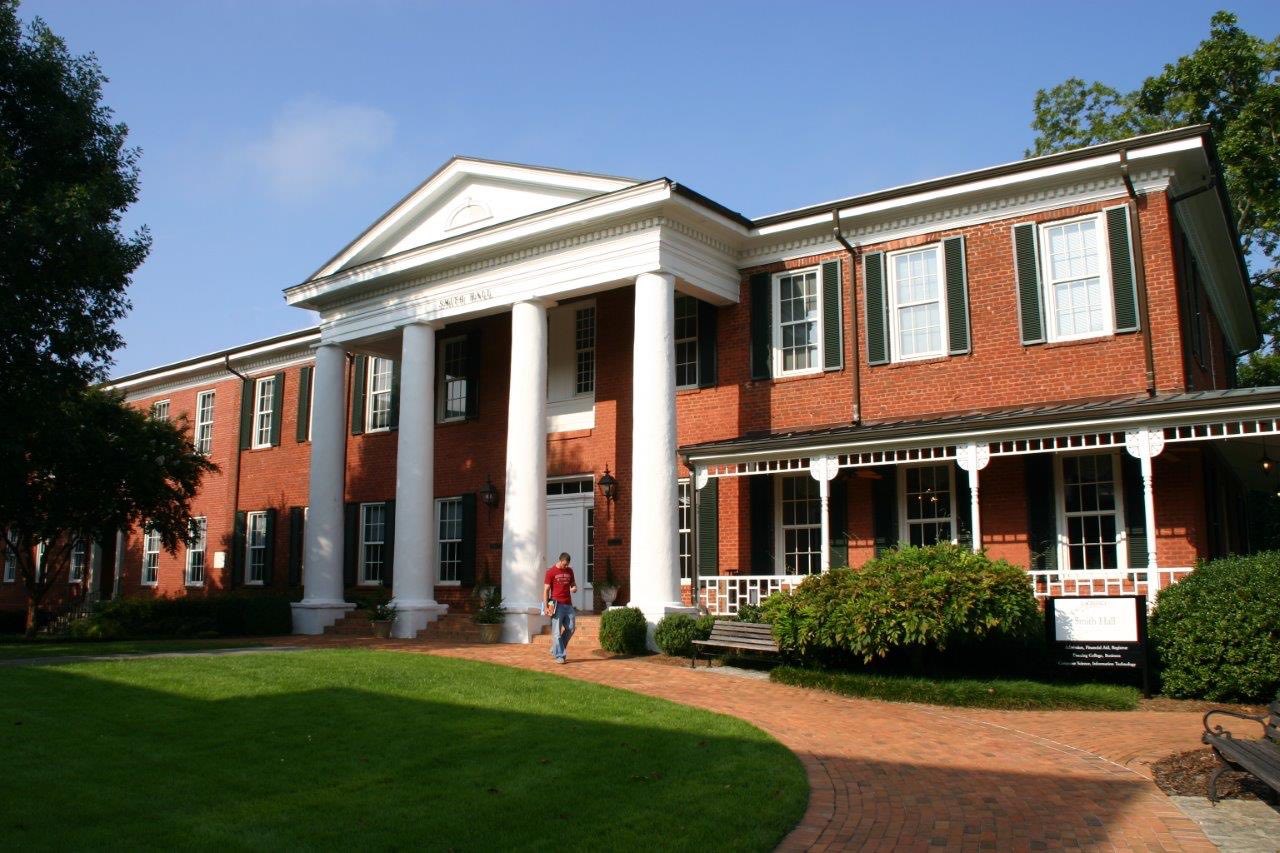
The original brickwork and columns were constructed by Ross Cameron, a mason who was born into slavery and later became a freedman. He worked alongside architect Benjamin H. Cameron. Later additions were completed by George and John King, sons of Horace King, a renowned builder in the region.
During the Civil War, Smith Hall was seized by the Confederate government and served as a hospital for wounded soldiers from November 1863 to June 1864.
Hawkes Hall
Built in 1911, Hawkes Hall is the second-oldest building on campus. Originally constructed as a dormitory, it also housed the college library for a period of time.
The building once featured a three-tiered porch that spanned its length, though it has since been removed. Hawkes Hall is named for Harriet Hawkes, mother of Albert King Hawkes, a major donor who also funded several children’s libraries across Georgia.
Pitts Hall
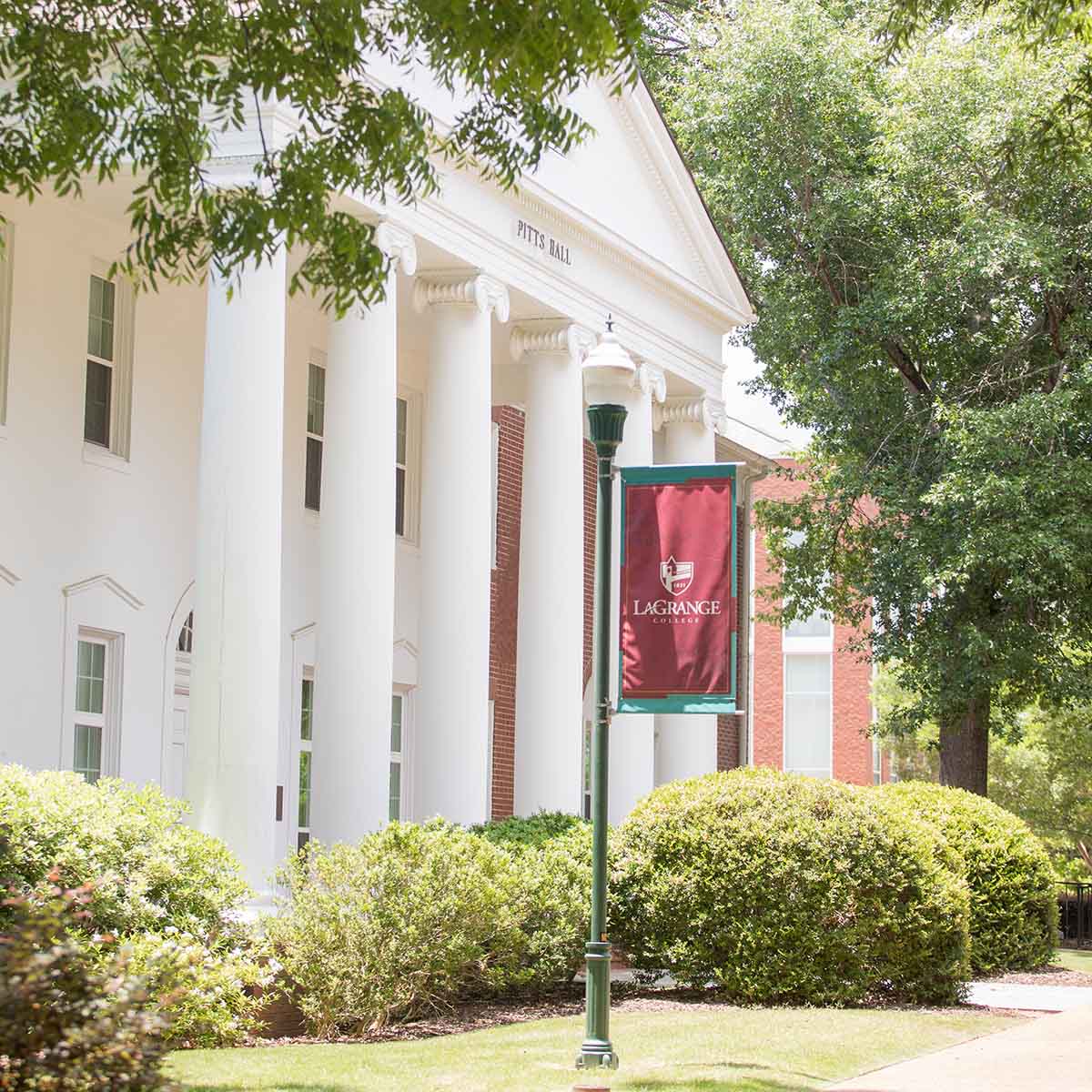
Completed in 1940, Pitts Hall is the third-oldest building on campus and was constructed just before the onset of World War II. Its completion came at a pivotal time, as building resources soon shifted toward the war effort.
The hall was named in memory of Mrs. Oreon Mann Smith, wife of former college president Rufus Wright Smith, who served from 1885 to 1915.
The Chapel
The LaGrange College Chapel connects the campus to a broader global and historical narrative. Its exterior includes stones from the Temple of Apollo at Corinth, dating to around 540 B.C., as well as from St. George’s Chapel in Windsor, England, built in the 14th century. These elements are displayed on either side of the chapel, accompanied by plaques detailing their origins.
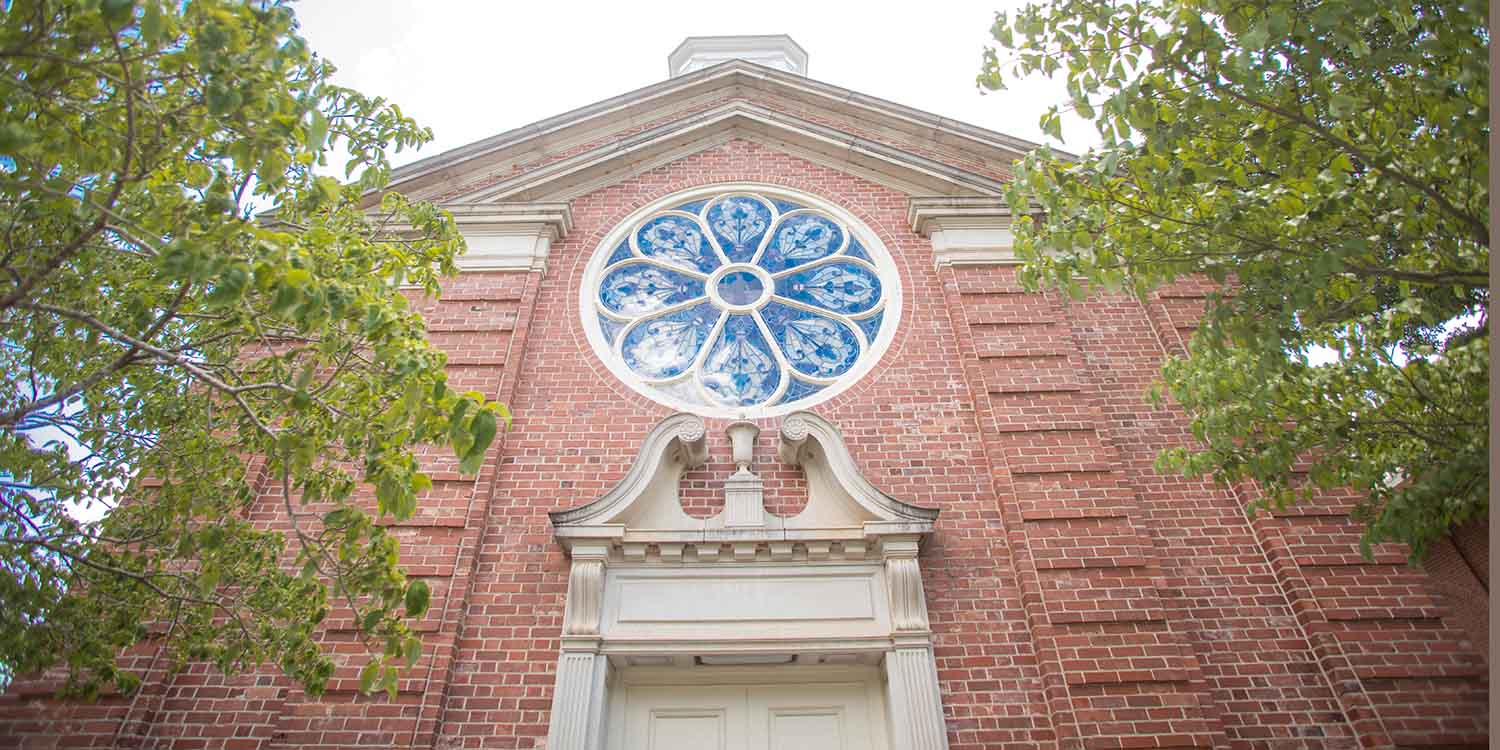
The chapel also holds a meaningful connection to LaGrange’s Methodist roots. Its stained glass windows were originally part of the 1898 First Methodist Church in LaGrange. When the church was later replaced, the windows were preserved and incorporated into the chapel, which was designed by architect Ed Neal.
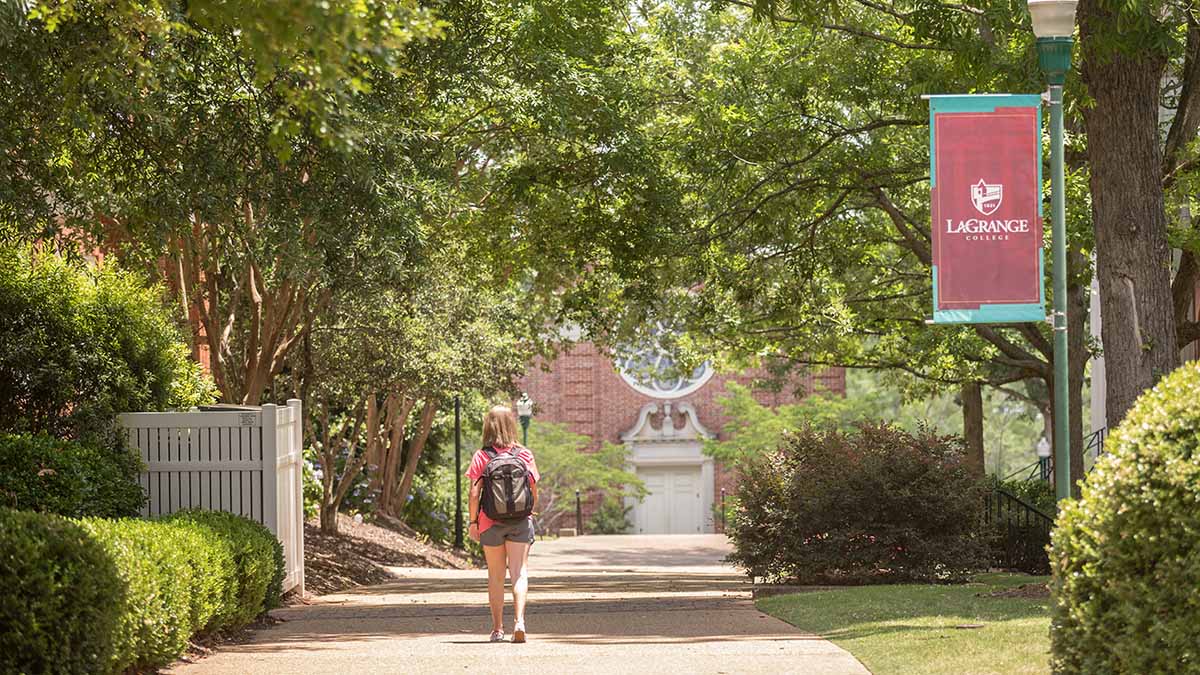
LaGrange College remains a place where history is not only preserved but experienced. Whether you’re taking a quiet walk across campus or exploring its architectural details, “The Hill” offers a meaningful glimpse into nearly two centuries of education, resilience, and community in LaGrange.