
The Nancy Harts: The Women Who Kept Watch
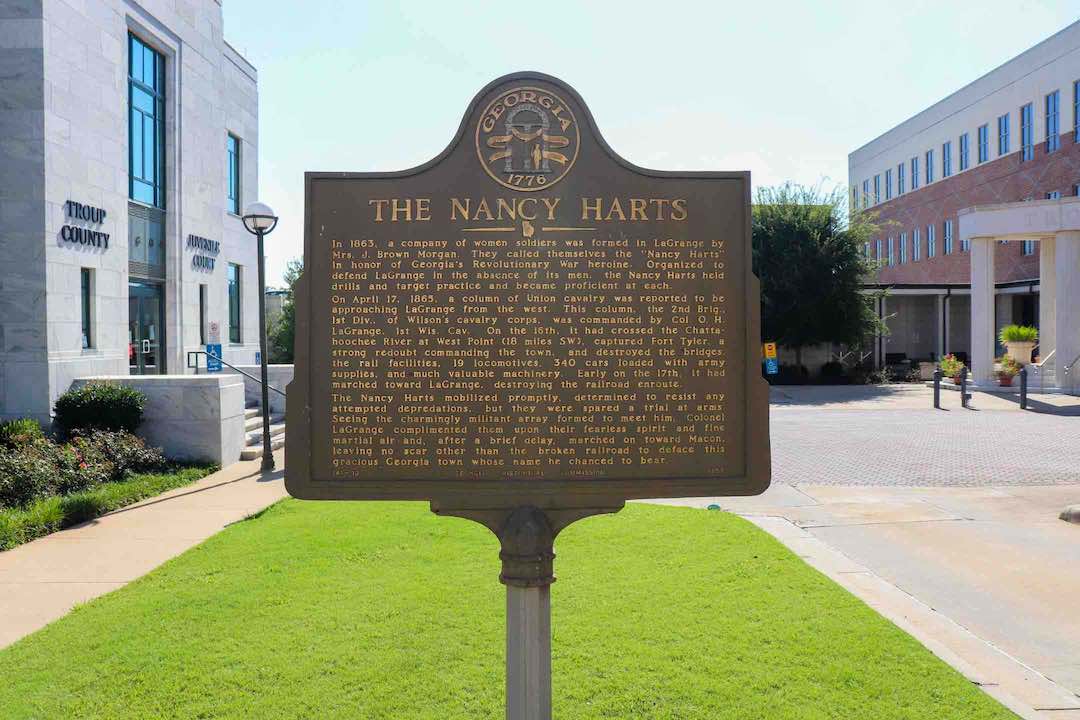
In 1861, at the start of the Civil War, approximately 1,300 men from LaGrange left to serve in the Confederate Army. Among those left behind was Nancy Hill Morgan, who recognized that their absence left the community especially vulnerable to Union forces.
Rather than remain in fear, Mrs. Morgan chose action. Alongside other women and children, she helped organize a group determined to protect the homes and town they loved.
In a small red schoolhouse in Ben Hill’s Grove, near the site of Bellevue, Mrs. Morgan held the first meeting of what would become the Nancy Hart militia—a female military company formed by the women of LaGrange.
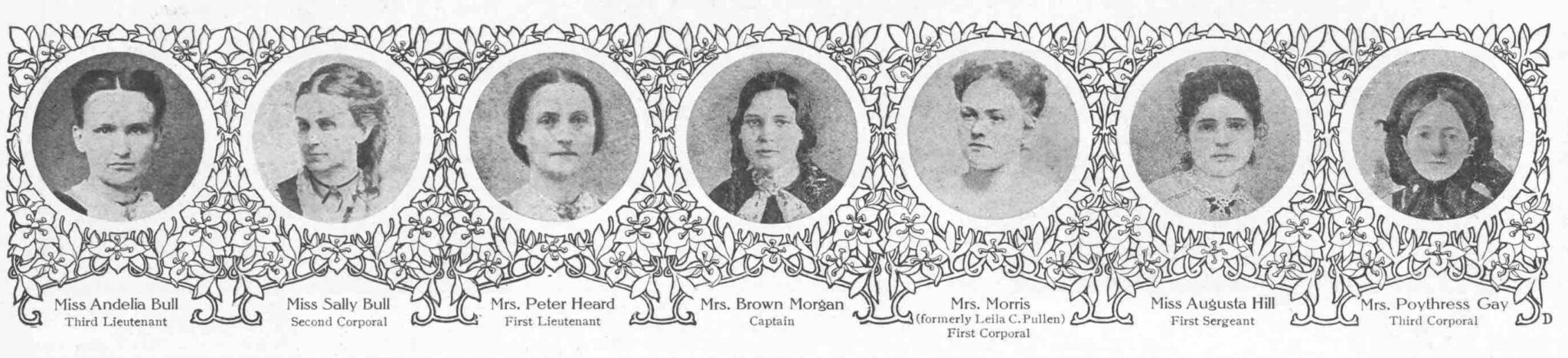
The group faced immediate challenges. Few had ever handled a firearm, most working weapons had left with the soldiers, and proper uniforms were scarce. In place of military attire, the women wore skirts and floral hats instead of traditional gray “Hardee” hats.
They established ranks among themselves, with Mrs. Morgan serving as captain and Mary Alford Heard as first lieutenant. The group chose the name “Nancy Harts” in honor of Nancy Hart, a Georgia heroine of the Revolutionary War, known for her bravery and resourcefulness.
Dr. A.C. Ware, a local physician who remained in LaGrange due to a disability, stepped in as their firearms instructor. Using Rifle and Light Infantry Tactics by William J. Hardee, the women trained in drills and marksmanship.
Despite limited resources, the community supported them by providing whatever weapons could be found—often old or worn firearms. Through determination and practice, the Nancy Harts became skilled markswomen, growing accustomed to both the recoil of rifles and the realities of war.
IBy 1863, LaGrange had transformed into a hospital town for wounded soldiers, and the Nancy Harts took on a new role as caregivers. Nearly every building became a place of treatment, and the women shifted from defense to compassion—serving as nurses while continuing to prepare for the possibility of attack.
At the same time, word of General William Tecumseh Sherman’s movements spread, creating an undercurrent of uncertainty throughout the town.
General Robert E. Lee surrendered on April 9, 1865, but news of the war’s end traveled slowly. On April 16, nearby Fort Tyler—often called the “Last Fort to Fall”—was attacked by Union troops led by Colonel Oscar LaGrange.
Even in the face of loss and uncertainty, the Nancy Harts continued their routines—drilling, marching, and remaining ready.
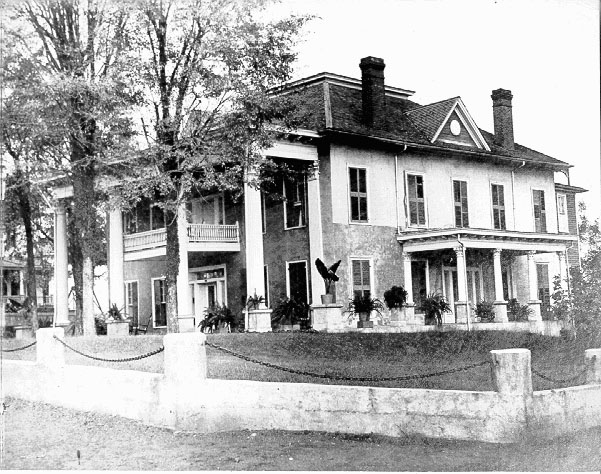
As local legend tells it, during one of their post-drill marches through town, the ladies met at the Heard Bailey Dallis house and marched up Broad Street to the Yancy Smith House (at the corner of Springdale and Broad), where they met the Union forces. Some of them had family at Fort Tyler, and one even went to retrieve the body of a relative from West Point on April 16. They were well aware of the troops moving into town.
The story also states that the ladies had put on multiple gowns in the event the troops burned their homes, they would have extra clothes.
With steady resolve, the Nancy Harts stood their ground—skirts pressed, rifles in hand.
While the details of the exchange remain unclear, something in that encounter left an impression. Colonel La Grange ultimately ordered guards placed around homes in the city, protecting them from the widespread destruction seen in neighboring communities.
Though buildings tied to the war effort—such as supply warehouses and a tannery—were destroyed, many homes in LaGrange were spared. As mothers, wives, and daughters, the women waited in a town marked by loss, yet preserved in part through their presence.
For four years, the Nancy Harts stood watch over LaGrange. Though they were never formally called into active combat, they fulfilled their purpose—defending their homes and community during one of the most uncertain times in the nation’s history.
In the years that followed, stories emerged of unexpected connections formed during and after the war. Some of the Nancy Harts even married Union soldiers, and Colonel La Grange himself was said to have been charmed by a Southern belle.
In a time defined by division, LaGrange became a place where resilience, courage, and even reconciliation took root—thanks in part to the women who kept watch.
A special thank you to Shannon Gavin Johnson and Lewis Powell at the Troup County Archives. Information referenced from the November, 1904 issue of Ladies Home Journal; “The Story of The Nancy Harts”.