Black history is an essential part of LaGrange’s story, shaping our neighborhoods, institutions, and cultural identity. During Black History Month, we invite you to reflect on the people, places, and contributions that continue to influence our community today.
Roots of Our Community
From the post–Civil War era through Reconstruction, Jim Crow, and the Civil Rights Movement, African Americans in LaGrange played a vital role in the city’s growth while navigating systemic barriers. Communities built schools, churches, and businesses despite limited resources and rights, laying the foundation for the city we know today.
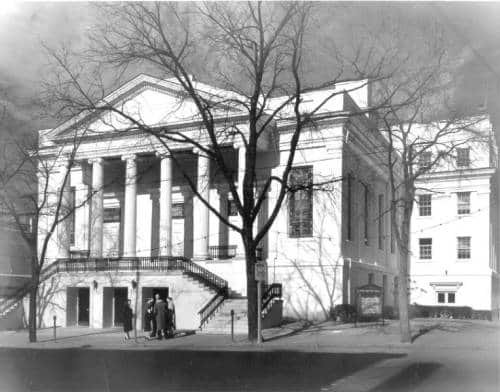
First Baptist Church in Downtown LaGrange
Trailblazers & Visionaries
LaGrange’s history and vibrant present are deeply shaped by Black visionaries who have turned passion into progress. From the architects of our skyline to the leaders of our community today, these individuals represent a legacy of excellence that defines our city. To better understand the heartbeat of our community, here are a few Black leaders who have made a lasting impact in LaGrange:
Dr. Benjamin T. Wood – LaGrange’s only African American physician when he arrived in 1927. He served the community for over 40 years, practicing from offices on Vernon and Fannin Streets until his tragic death in 1970.
Glen Robertson – The first Black lineman for Georgia Power and later a successful entrepreneur, owning a funeral home, theater, and café. In 1970, he became LaGrange’s first Black City Councilman and advised President Jimmy Carter.
Ethel W. Kight – Educator and Troup County’s first Jeanes Supervisor, Kight modernized schools, led integration efforts, and opened a library for the Black community. Ethel W. Kight Elementary School honors her legacy.
Giles Wilkinson – A free person of color in the 1800s, Wilkinson was a successful landowner and businessman. His estate supported his family and contributed to the development of LaGrange’s Eastside.
Ethel W. Kight
The Soul of LaGrange
LaGrange artist Annie Greene is best known for her vibrant yarn paintings, a medium she first discovered in 1972 while teaching seventh-grade art—because it was the one thing that could quiet her classroom. What began as a teaching experiment quickly became her signature art form, captivating her with its color, texture, and storytelling potential. Born in Waycross, Greene settled in LaGrange in 1955 and taught art in Troup County schools until retiring in 1989. Since then, she has worked as a full-time artist, earning widespread recognition with more than 50 solo exhibitions and numerous awards across the Southeast and New York, cementing her legacy as a pioneering and prolific yarn artist.
Greene next to her portrait of a morning church service
“When I play the blues, I am connecting with those before me and presenting it to others.”
A prominent figure in the LaGrange and Greenville music scene, Grammy-nominated artist Jontavious Willis evolved from church piano to mastering guitar and banjo by age 18. Influenced by his grandfather and Muddy Waters, Willis has toured Europe but remains a fixture in the GAS (Greenville-Auburn-South) region as an educator. He views Black History Month as a vital defense against whitewashed narratives, citing his ancestors’ roles in Greenville’s first integrated class as proof that history must be preserved. Willis challenges us to move beyond “preaching love” and instead live love by protecting and celebrating Black culture—ensuring that the history of the people who redefined American art is never lost or retold untruly.
Willis' album cover for Spectacular Class
Honoring Sacred Ground
Established in the 1860s, Mulberry Street Cemetery is one of LaGrange’s most significant African American historic sites, serving as a burial ground for formerly enslaved individuals and their descendants. The cemetery reflects the resilience and community of generations who built families, churches, and businesses despite systemic barriers.
The cemetery also features the work of Horace King, a formerly enslaved expert bridge builder and carpenter who became a renowned architect in the South. King contributed his craftsmanship to several structures in LaGrange, including a portion of the downtown square, and his legacy endures at Mulberry Street Cemetery through carefully designed monuments and architectural elements, connecting visitors to both the artistic and historical heritage of the city.
Horace King covered bridge at Mulberry Street Cemetery
Carrying the Torch
Black history in LaGrange is both a reflection of the past and a living story. From historic sites and community leaders to local art and music, the city offers countless ways to engage with the people and culture that continue to shape its identity today.